Extruding full rubber bales without a granulator
Walk into most rubber compounding operations today and somewhere upstream of the mixer one will find a granulator. It sits
Read More
Walk into most rubber compounding operations today and somewhere upstream of the mixer one will find a granulator. It sits
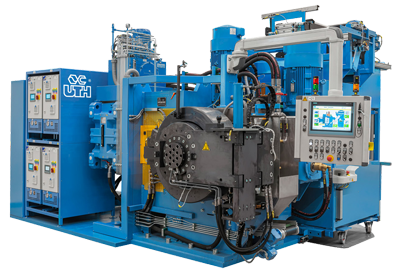
Read MoreSince the introduction of the roll-ex gear pump extruder technology in 1995, UTH GmbH from Fulda, Germany has become a
Read MoreThe specific properties of vulcanized materials make them essential for many areas of application. In industries such as aerospace, food and beverages and the energy sector, components must meet the highest standards of abrasion and chemical resistance, elasticity, and durability. Delivering top-quality solutions in these areas requires excellent materials expertise, and at Freudenberg Sealing Technologies this goes hand in hand with state-of-the-art production technologies: With LCM (Liquid Curing Method), the company is now commissioning an advanced vulcanizing extrusion line. This is a process in which the fluid used for vulcanization consists of molten salt, heated to around 200 degrees Celsius and filled with vulcanizing salt. The entire line operates in a closed loop, in which the salt is continuously recycled, fed back into the process and reused.
Read MoreKraussMaffei Extrusion now offers machine technology with the flexible ZE BluePower, which processes formulations with halogen-free flame retardants in polyolefins – as an alternative to conventional cable formulations based on halogenated flame retardants. The specially configured extruder is used to produce high-quality HFFR (Halogen Free Flame Retardant) compounds with ATH (Aluminum Trihydroxide) content of up to 65%. Additionally, the ZE BluePower can be adapted to various process tasks and formulations, offering customers high flexibility for individual requirements.
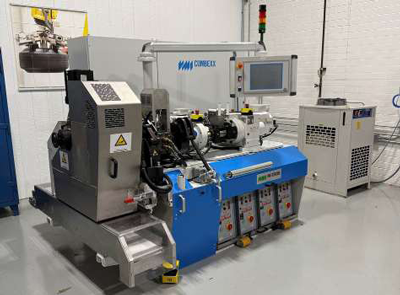
Read MoreBy using high precision continuous extrusion with an integral, built-in gear pump, it is possible to move away from old style mills, which have a huge footprint, and generally include plenty of safety hazards. Continuous extrusion removes the need for ramping up production in batches, which simplifies and accelerates preparation; and also separates materials input from production output. Current users report that this improves both control of production and quality.
Read MoreFriction induced noise in automotive door seals is mitigated with highly durable water-based coatings having a low coefficient of friction.
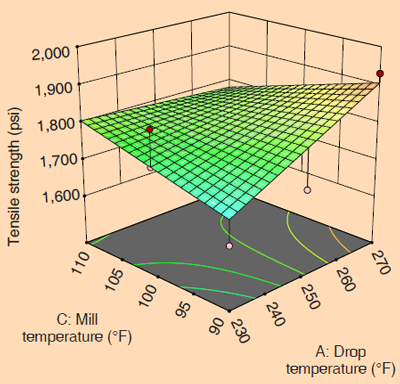
Read MoreA design of experiments (DOE) on two EPDM rubber extrusion compounds identifies to what degree properties are influenced by mixing drop temperature, milling time and mill temperature.
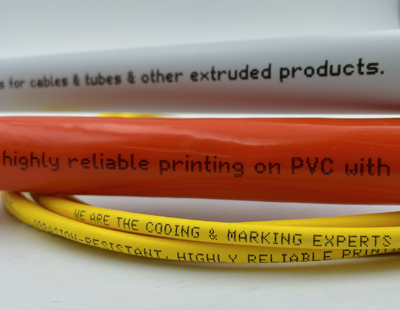
Read MoreEIBINGER announces the developed a special ink for cable marking and meter marking of extruded goods, one that adheres reliably to PVC materials. This ink is resistant to plasticizers which means it can prevent the effect described above of accidental transfer prints. With a Blue Wool Scale (BWS) ranking of 8, it also possesses exceptional UV stability.
Read MorePrincipal methods for processing elastomeric materials are reviewed, including continuous extrusion and what is described as multi-step extrusion.
Read MoreBlends of hard clay, N990 and N550 were utilized to evaluate the electrical percolation region of EPDM compounds; and the viscosity and physical properties of the compounds were also measured.
Read More