

Polysulfide rubber market forecast at $572 million by 2030
The global market for Polysulfide Rubber was estimated at US$471.5 Million in 2024 and is projected to reach US$572.9 Million by 2030, growing at a CAGR of 3.3% from 2024 to 2030 according to Research and Markets. This report provided in-depth analysis of trends, drivers, and forecasts to support confident decision-making. It included the most recent global tariff developments and their impact on the Polysulfide Rubber market.

Non-automotive rubber transmission belts market projected to reach $7.5 billion
The global market for non-automotive rubber transmission belts is projected to reach $7.5 billion by 2032, driven by technological advances, industrial growth and increasing demand across sectors including manufacturing, mining and agriculture.
The market was valued at $5.5 billion in 2024 and is expected to grow at a compound annual growth rate of 3.9% through 2032, according to Polaris Market Research.

Synthetic rubber market forecast at $39.9 billion by 2030
The synthetic rubber market size is expected to see steady growth in the next few years. It will grow to $39.95 billion by 2030 at a compound annual growth rate (CAGR) of 4.8%. The growth in the forecast period can be attributed to growing adoption of electric vehicles, increasing demand for sustainable elastomer materials, rising investments in advanced industrial manufacturing, expansion of infrastructure and construction activities, growing use of specialty rubber compounds in electronics and healthcare.

Medical-grade rubber tubing market poised to nearly double by 2035
IndexBox projects the market to expand at a baseline compound annual growth rate of 7.2% from 2026 through 2035. Using 2025 as a base year with an index of 100, the market is forecast to reach 198 by 2035.
Global synthetic rubber market forecast at $24.6 billion
The global market for Synthetic Rubber was valued at US$19.9 billion in 2024 and is projected to reach US$24.6 Billion by 2030, at a 3.6% CAGR from 2024 to 2030 according to Research and Markets. This in-depth report analyzes trends, drivers, and forecasts to support informed decisions. It integrates the most recent global tariff developments and their impact on supply chains and sourcing. Independent analysis of annual sales and forecasts from 2024 to 2030 equips you with clear, comparable metrics.

Global rubber consumption falls 5.3 percent in Q1
Global rubber consumption declined by 5.3% year-on-year in Q1 2026, while total rubber production contracted by 3.3%, according to the latest data released by the International Rubber Study Group (IRSG) in its Rubber Statistical Bulletin. The figures point to weakening rubber demand amid a challenging global economic environment and softer consumption across major markets.

USTMA predicts lower tire shipments for U.S. market
The U.S. Tire Manufacturers Association (USTMA) projects total U.S. tire shipments of 330.3 million units in 2026, compared to 336.3 million units in 2025 and 332.7 million units in 2019.
Compared with 2025, Original Equipment (OE) shipments for passenger, light truck, and truck tires are expected to change by -0.7%, -1.9%, and 6.2% respectively, with a total decrease of 0.1 million units. Replacement passenger, light truck, and truck tire shipments are also projected to change by -1.6%, -1.6%, and -7.1% respectively, with a total decrease of 5.9 million units.

U.S. manufacturing tops economists’ expectations for July
The Institute for Supply Management’s manufacturing purchasing managers index rose to 55.6 in July from 53.3 in June, topping economists’ expectations of about 54.0. A reading above 50 signals expansion in the factory sector. The July figure was the highest since May 2022 and marked the seventh straight month of growth after a prolonged contraction earlier in the recovery.
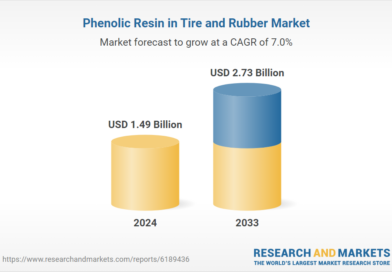
Phenolic resin in tire and rubber market forecast with a CAGR 7 percent
The global phenolic resin in tire and rubber market size was estimated at USD 1.49 billion in 2024 and is expected to reach USD 2.73 billion by 2033, growing at a CAGR of 7.0% from 2025 to 2033 according to a new report from Research and Markets. The growing automotive, construction, and manufacturing demand is driving the market.
Global elastomer market projected to reach $147.5 billion by 2034
The global elastomer market is projected to grow from an estimated $110.2 billion in 2026 to $147.5 billion by 2034, representing a compound annual growth rate of 3.7%, according to a new market research report from ResearchAndMarkets.com.
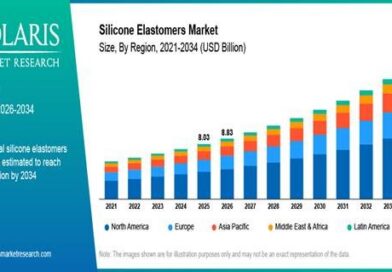
Silicone elastomer market forecast at $19 billion by 2034
The global silicone elastomers market is entering a decade of sustained expansion, driven by accelerating demand from electric vehicles, medical devices, and advanced electronics. According to a comprehensive industry analysis by Polaris Market Research, the market size was valued at USD 8.03 billion in 2025 and is projected to reach USD 19.34 billion by 2034, expanding at a compound annual growth rate (CAGR) of 10.3% between 2026 and 2034.

Additive manufacturing market forecast at $215 billion by 2034
The global additive manufacturing market valued at USD 31.36 billion in 2025, is projected to reach USD 215.49 billion by 2034, expanding at an impressive CAGR of 23.9% during the forecast period according to Polaris Market Research. The rapid shift toward digital manufacturing, lightweight material production, and customized industrial applications is positioning additive manufacturing as a core technology across aerospace, healthcare, automotive, energy, and industrial manufacturing sectors.

Thermal management technologies market to reach $30 billion by 2030
The thermal management market is entering a phase of strong growth, driven by rising performance demands in digital and industrial systems. These solutions are becoming critical across a wide range of applications, creating new opportunities for innovation and scale. Faster is among the companies shaping this evolution. “Rising energy density and the spread of high-performance systems are making thermal management increasingly central,” said Matteo Arduini, CEO of Faster. “It is becoming a strategic enabler of the digital economy.”
U.S. manufacturing expands in March as cost pressures persist, ISM reports
U.S. manufacturing activity grew in March for a second straight month, though rising costs and uneven demand continued to challenge the sector, according to data released Wednesday by the Institute for Supply Management.
The ISM manufacturing index registered 52.7 in March, up from 52.4 in February. A reading above 50 indicates expansion in the manufacturing sector.
USTMA projects modest growth in U.S. tire shipments for 2026
The U.S. Tire Manufacturers Association (USTMA) released its February 2026 shipment forecast, projecting a modest increase in total tire shipments across the U.S. market compared with the prior year. According to the association’s latest data, total shipments are expected to reach 338.9 million units in 2026, up from 336.3 million units in 2025 and from 332.7 million recorded in 2019. The expected total would surpass the previous high of 337.3 million units in 2024, underscoring continued growth in the sector.
Rubber processing chemicals market forecast at $11.1 billion by 2034
The global rubber processing chemicals market is experiencing robust expansion, with industry valuations reaching USD 5.9 billion in 2024 and projections indicating a remarkable trajectory toward USD 11.1 billion by 2034. According to comprehensive market research by Polaris Market Research, the sector is set to grow at a compound annual growth rate (CAGR) of 6.50% throughout the forecast period, signaling unprecedented opportunities for chemicals and materials industry stakeholders.

Global bio-based polymer market to grow by 11 percent through 2030
Drawing on decades of experience and expertise in the bio-based chemicals and materials sector nova-Institute with its renowned biopolymer expert group has become the leading provider of market and trend data on bio-based building blocks and polymers. In addition to publishing annual data on bio-based building blocks and polymers in its well-known report on “Bio based Building Blocks and Polymers – Global Capacities, Production and Trends”, nova-Institute has also been providing data to European Bioplastics (since 2016) and Plastics Europe (since 2023). The data published annually by European Bioplastics and Plastics Europe are taken from the nova-Institute market report, but cover a smaller or different selection of bio-based polymers, based on different scopes.

U.S. manufacturing activity rebounds after 12 months of contraction
Economic activity in the manufacturing sector expanded in January for the first time in 12 months, preceded by 26 straight months of contraction, say the nation’s supply executives in the latest ISM® Manufacturing PMI® Report.

Global asphalt rubber market forecast with a CAGR of 6.7 percent through 2033
The asphalt rubber market is demonstrating consistent and sustainable growth driven by infrastructure modernization and recycling initiatives. Market projections indicate that the industry is expected to reach USD 7.6 billion by 2033, expanding at a CAGR of 6.7% during the forecast period.
This growth trajectory highlights increasing confidence in asphalt rubber’s long-term economic and performance benefits, particularly in regions facing aging road networks and rising traffic volumes.

Global rubber coated fabrics market valued at $2.3 billion by 2032
Global key players of Rubber Coated Fabrics include Continental (ContiTech), Trelleborg AB , GUMOTEX Coating, Chemprene and Bobet, etc. Top three players occupy for a share about 16%. China is the largest market, with a share about 27%, followed by North America and Europe. In terms of product, Synthetic Rubber Coated Fabrics is the largest segment, with a share over 56%. In terms of application, Transportation is the largest market, with a share over 38%.
Rubber market enters a structurally moderate growth phase, IRSG World Rubber Industry Outlook finds
The global rubber market is moving into a period of structurally moderate growth as slowing macroeconomic momentum and a maturing automotive sector reshape long-term demand patterns, according to the latest World Rubber Industry Outlook released by the International Rubber Study Group (IRSG). Global rubber consumption down 0.6% year-on-year in Q2 2025, but up 1.9% in the first half of 2025

Global rubber market forecast at $88 billion by 2035
The global rubber market is poised for substantial growth, with the market size projected to expand from USD 48.49 billion in the current year to USD 88.06 billion by 2035, achieving a CAGR of 5.57% over the forecast period according to ResearchandMarkets.com. Rubber’s crucial role in the industrial sector stems from its wide application in industries such as automotive, aerospace, electronics, marine, and energy, offering benefits like flexibility, thermal shrinkage, and durability.

Global silicone release liner market forecast at $4 billion by 2025
The market is projected to grow from USD 1,720 million in 2025 to USD 4,220 million by 2035, expanding at a compound annual growth rate (CAGR) of 7.7%. This remarkable growth trajectory reflects strong industrial momentum and continuous innovation in liner materials and coating technologies.

Rubber process oil market forecast at $2.4 billion by 2030
The global market for rubber process oils is projected to grow steadily over the next five years, reaching an estimated $2.49 billion by 2030 as demand rises from key manufacturing sectors according to Markets and Markets.
Industry analysts forecast a compound annual growth rate of around 2.6% from 2025 to 2030, reflecting stable expansion as rubber producers seek improved processing performance and enhanced compound properties in a wide range of applications.

Global silicone market forecast at $27 billion by 2033
The Global Silicone Market is entering a transformative decade—one shaped by rapid industrialization, sustainability-driven innovation, and the rising performance expectations of end-use industries. According to Renub Research, the global market will reach US$ 27.16 billion by 2033, increasing from US$ 17.29 billion in 2024 at a CAGR of 5.15% between 2025 and 2033.

United States carbon black market expanding rapidly
The Global carbon black market is at a tipping point, driven by eco-manufacturing mandates and every ounce of material science evolution in reinforcements. Valued at USD 21.85 billion in 2024, it is projected to reach USD 32.68 billion by 2032 at a steady 5.16% CAGR. North America, capturing nearly a fifth of the global share, spearheads expansion powered by tire and battery demand, while Asia Pacific benefits from production scale

Global reclaimed rubber market forecast at $4.6 billion by 2035
According to a new industry forecast from Market Genics, the market — valued at roughly USD 1.8 billion in 2025 — is expected to more than double by 2035, reaching approximately USD 4.6 billion. Analysts project a compound annual growth rate (CAGR) of nearly 9.8%, driven by stricter environmental regulations, rising raw material costs, and stronger adoption of circular-economy practices across multiple industrial sectors.

Silicone defoamer market forecast at $4 billion by 2031
The global market for Silicone Defoamers was estimated to be worth US$ 2910 million in 2024 and is forecast to a readjusted size of US$ 4043 million by 2031 with a CAGR of 4.5% during the forecast period 2025-2031 according to QY Research
IRSG Rubber Industry Report signals weaker Q2 demand
The International Rubber Study Group (IRSG) has released its Rubber Industry Report (July–September 2025), providing an updated assessment of global rubber demand, supply and trade developments for the first half of 2025.
USTMA November 2025 forecast predicts slightly higher tire shipments
The U.S. Tire Manufacturers Association (USTMA) projects total U.S. tire shipments of 337.4 million units in 2025, compared to 337.3 million units in 2024 and 332.7 million units in 2019. This surpasses the previous record of 337.3 million units in 2024.
Because the U.S. government shutdown delayed the release of August and September tire trade data, the current forecast is produced without these inputs and may therefore contain higher-than-usual estimation errors for U.S. replacement shipments.