The evolution of latex foam
The history of the global latex industry is presented by the author, tracing its journey from rudimentary beginnings through incremental advancements to contemporary global shifts and innovations
Read More
The history of the global latex industry is presented by the author, tracing its journey from rudimentary beginnings through incremental advancements to contemporary global shifts and innovations
Read MoreIt has been estimated that there are 2,500 plants that can produce a natural latex: a bioelastomer. Of course, not all of them can produce a polymeric latex with a high molecular weight, readily processable and commercially viable. To date, three species account for the majority of interest associated and centered
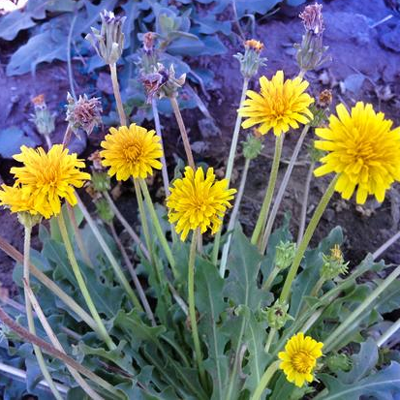
around the discussion of natural latex: Hevea rubber trees (Hevea brasiliensis), guayule (“why-yule-ee,” Parthenium argentatum) and rubber dandelion (Taraxacum kok-saghyz). The rubber tree, typically found in tropical Southeast Asia, produces nearly 90% of the world’s natural latex. Guayule (a desert shrub) and rubber dandelion are plants found in more temperate regions in the U.S., and figure to be potential domestic sources of natural rubber and latex.
TechnoBiz is organizing a KnowHow Webinars forum focusing on “Advanced Latex Technology,” November 9 at 7 p.m. in Thailand. This forum is focused on the latest technological developments in latex processing. TechnoBiz invites interested latex experts and specialists to present papers during this forum. There are altogether six presentation slots in this forum.
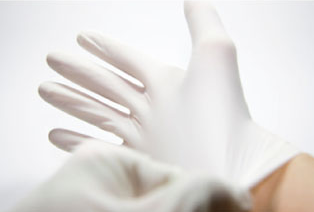
Read MoreThe global latex gloves market is growing profusely since the onset of COVID 19. With the pandemic ever-increasing across the globe, the market demand is rising substantially. The onslaught of the pandemic has still been hovering despite stringent vaccination measures by Governments worldwide. With newer strains emerging regularly, it is expected that the latex gloves market would witness significant traction during the years to come
Read MoreThe world today uses 12,000 medical gloves per second. Prior to the UP publication, U.S. glove production had been satisfied by a number of medical device manufacturers, namely, Safeskin, Ansell, Aladan, Baxter, Smith & Nephew and Johnson & Johnson. In addition, glove imports in the U.S. prior to 1985 were 1 billion pieces. In 1996, imports exceeded 21 billion pieces.
Read Moreby David A. Ramirez-Cadavid, Frederick C. Michel, Katrina Cornish, The Ohio State University Natural rubber (NR) is a unique and
Read More