


Today's News
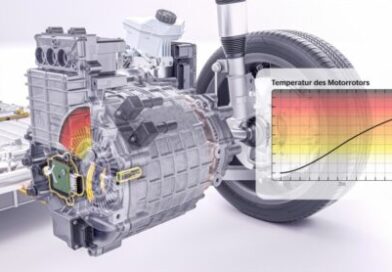
Continental develops sensor technology measuring internal EV motor heat
Continental has developed a new sensor technology that measures the temperature inside permanently excited synchronous motors in electric vehicles (EVs) directly on the rotor for the first time. The e-Motor Rotor Temperature Sensor (eRTS) delivers significantly more precise measurement results than the current software-based temperature simulation – with a tolerance range reduced from 15°C to just 3°C. This enables vehicle manufacturers to reduce the amount of rare earth elements used to increase the magnets’ heat resistance and to improve potential motor performance, which also means greater sustainability. The eRTS is one of several sensor technologies for EVs developed by the E-Mobility Sensors (EMS) product center in Continental Automotive.

Orion S.A.’s new Sustainability Report highlights contribution to electrification
Orion S.A. released its 2024 Sustainability Report, showcasing how the company is making materials that are essential for a world with increased electrification of mobility and energy storage.

Teknor Apex announces Bikes for a Brighter Future initiative
Teknor Apex is launching its Bikes for a Brighter Future initiative. Through partnerships with the Boys & Girls Clubs of America, United Way, and local charitable organizations in Asia and Europe, the company will donate and distribute bicycles and bike helmets to children in the community. This new, and soon-to-be annual program, underscores the company’s commitment to community service by providing impactful opportunities while honoring retired CEO (and current Chairman of the Board) Jonathan Fain’s love of cycling.

The latest issue of Rubber Review is now available online
Bangkok, Thailand – The June 3rd issue of Rubber Review is now available online. In this issue we have a

Goodyear Blimps to soar over Akron in centennial celebration
In a historic tribute to a century of aviation excellence, Goodyear is set to launch all three of its iconic blimps—Wingfoot One, Wingfoot Two, and Wingfoot Three—into the skies over Akron, Ohio, this week. The event marks the 100th anniversary of the Goodyear Blimp, a symbol that has become synonymous with American innovation and aerial spectacle.

Apollo Tyres achieves gold rating in EcoVadis sustainability assessment
Apollo Tyres Ltd has received the prestigious Gold Rating from EcoVadis, the world’s leading provider of business sustainability ratings. This accomplishment places Apollo Tyres in the top 5% of all companies globally, across industries, reflecting company’s unwavering commitment to sustainability, ethical business practices and social responsibility.




Featured



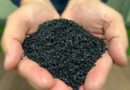





Mixing
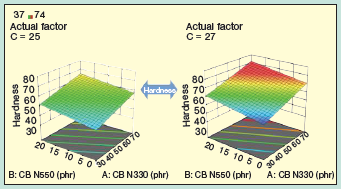
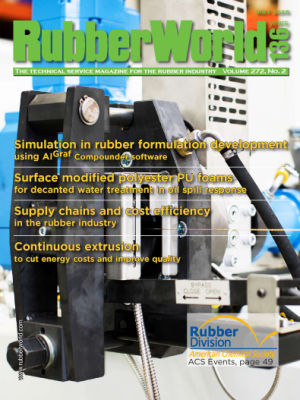
Simulation of rubber formulation development using AI-Graf Compounder
Integration of artificial intelligence (AI) into rubber compound development is said to mark a transformative step in materials science, and the authors explore the use of AIGraf Compounder software to simulate and optimize rubber formulations. By leveraging feedforward neural networks, the system can predict material properties based on ingredient compositions.




Chemicals and Materials

Goodyear sells off Chemical Business to Gemspring Capital Management
Pursuant to the transaction terms, Gemspring will pay Goodyear cash proceeds at closing of approximately $650 million, subject to certain post-closing adjustments, for Goodyear Chemical facilities in Houston and Beaumont, Texas, and a related research office in Akron, Ohio. Additionally, the transaction provides for a long-term supply agreement.




Extrusion
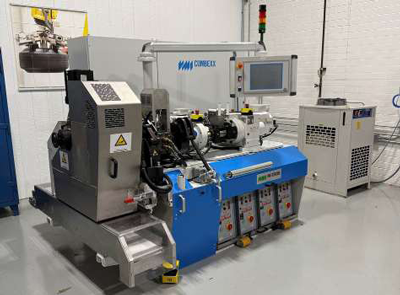
Continuous extrusion to cut energy costs and improve quality
By using high precision continuous extrusion with an integral, built-in gear pump, it is possible to move away from old style mills, which have a huge footprint, and generally include plenty of safety hazards. Continuous extrusion removes the need for ramping up production in batches, which simplifies and accelerates preparation; and also separates materials input from production output. Current users report that this improves both control of production and quality.




Silicone & Medical

Kraiburg introduces new Thermolast H compounds for medical tubing
KRAIBURG TPE introduces the new THERMOLAST® H compounds designed to meet the strict requirements of medical tubing. With flexibility, kink resistance, chemical compatibility, colorability, and other specialized benefits, THERMOLAST® H TPEs deliver a safe, smart, and sustainable material solution for a wide range of medical and healthcare applications. Ideal for the development of next-generation IV lines, external catheters, and customized tubing such as peristaltic, drainage, short-term use feeding tubes, and more.


Oil, Gas & Energy

Advanced perfluoroelastomers: The preferred sealing solution for oil and gas
The technology for sealing has considerably advanced since it was first developed in the late 1800s. It is crucial to

Testing & Instruments

Researchers develop soft sensor system to study rubber components
A research team from the University of Akron, supported by funding from Hyundai NGV, has developed a soft sensor system designed to study the behavior of rubber components in automotive pneumatic systems. This academic effort, published in Smart Materials and Structures on February 27, 2025, represents a step towards advancing knowledge, as no prior research has specifically explored the use of soft sensors to examine rubber performance in this context.
Molding
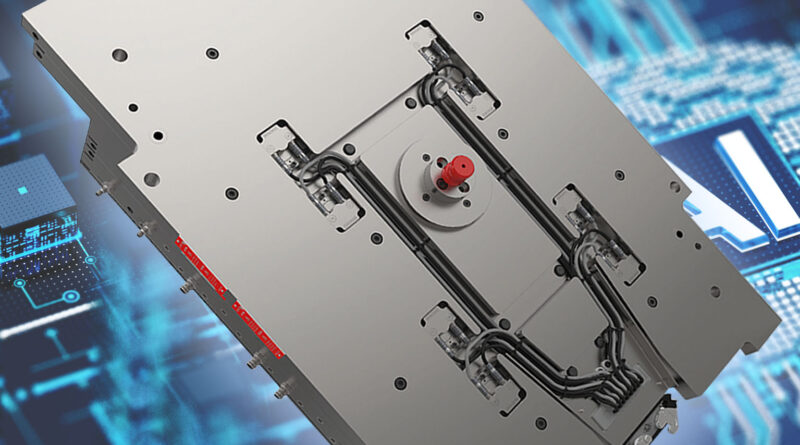
Elmet SMARTshot I to use AI intelligence to control mold flow
The pioneering “I” technology is based on online rheometry for continuously optimizing the process and determining the actual material viscosity in the shear rate range of relevance to injection molding. This technology uses a mathematical relationship between the volumetric flow rate of the injection molding machine, the geometric constraints of the cold runner, and the shear force at the needle to identify and quantify batch-to-batch fluctuations. This turns the cold runner into rheological measuring instrument.
In learning mode, the system automatically detects the volume of material required to fill a cavity, so facilitating setup and optimization, especially with family molds with a number of cavities of differing sizes. Ready for integrating artificial intelligence (AI), the system is set in future to be able to support self-controlled injection molding machines if SMARTshot I control is integrated into the machine at a later date.
Thermoplastic Elastomers & Urethanes

Huntsman extends automotive portfolio with intumescent coating
Huntsman has launched a new intumescent polyurethane coating system developed for automotive applications, which can provide passive fire protection to metal and composite substrates used in electric vehicles (EVs) – without compromising design flexibility. POLYRESYST® EV5005 polyurethane coating system has been developed to help protect structural integrity and improve fire protection in battery cells – a key challenge in the automotive industry.
Latex and Natural Rubber
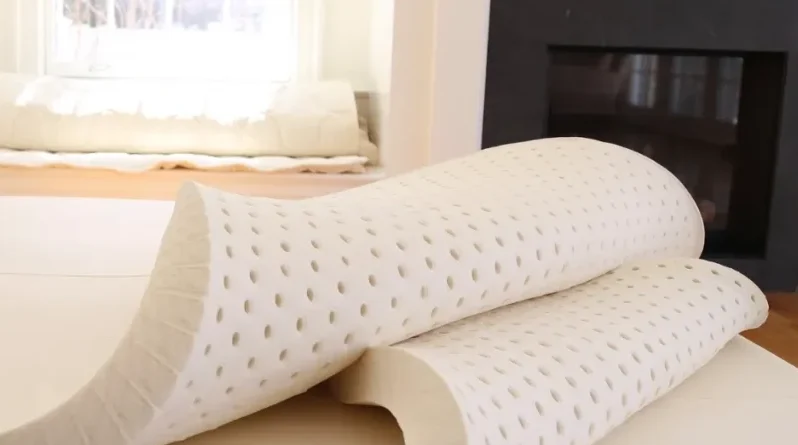
Latex Foam and its applications
by Boontham Nithi-Uthai, consultant Latex foam was industrially created in 1929 by Dunlop Rubber. The latex was foamed with fatty