
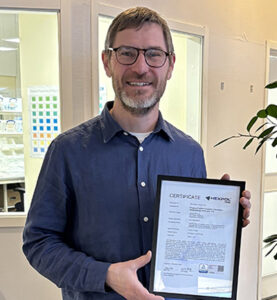
Hexpol TPE awarded TÜV Rheinland certification for product carbon footprint
Malmo, Sweden HEXPOL’s TPE companies in Sweden, the UK and Germany have achieved third-party certification of their product carbon footprint (PCF) methodology from TÜV Rheinland. Providing customers with independent validation that PCF calculations are reliable, consistent and comprehensive.
TÜV Rheinland is a globally recognized organization for independent inspection services. They have certified that the methodology developed by HEXPOL TPE is scientifically based and reflects the state-of-the-art. It complies with the requirements of ISO 14067:2018, an industry standard for the measurement of greenhouse gases from the carbon footprint of products. TÜV Rheinland states that the approach and principles behind HEXPOL TPE’s PCF methodology are appropriate for the assessment of potential climate change impacts of the products considered.
PCF calculation is an iterative process that should be adapted in line with advancements in science, technology and industry-specific developments. HEXPOL TPE were among the first TPE manufacturers to offer PCF data more than 5 years ago. As higher-quality supplier data becomes available, alongside Life Cycle Inventory database updates, and evolving standards and guidance, HEXPOL TPE teams have deepened their knowledge and understanding of the PCF calculation landscape. This has shaped the HEXPOL TPE PCF methodology, resulting in a calculation method that is now backed by TÜV Rheinland certification. HEXPOL TPE’s methodology is subject to an annual audit and review, ensuring consistency over time.
Klas Dannäs, sustainability director at HEXPOL TPE, commented, “HEXPOL TPE’s approach values accuracy and transparency, with a focus on calculating the most trustworthy and representative product carbon footprint. We’re enabling customers to make informed material choices and support their Scope 3 emissions calculations. And we’re using the data in our material development process, looking for opportunities to improve our climate performance, whether through recycled and renewable materials or supplier and energy efficiencies.”
This project sits within HEXPOL TPE’s broader sustainable development approach, complementing other frameworks and assessments that HEXPOL TPE work with, such as ISCC PLUS, C2C Material Health and EcoVadis. All of these initiatives aim to provide transparency, independent verification, and enable informed decision-making that leads to improvements in climate performance.