
Freudenberg introduces solvent-free bonding process for elastomers to metal
Weinheim, Germany — Freudenberg Sealing Technologies has introduced a new adhesive bonding process that eliminates the need for wet-chemical treatments, aiming to reduce environmental impact and improve manufacturing efficiency.
The process, known as FACT (Freudenberg Adhesive Clean Technology), enables the bonding of elastomers to metal and plastic substrates without the use of solvents or binders. The fully automated system modifies component surfaces at a microscopic level, allowing them to be immediately ready for further processing such as vulcanization.
Company officials said the technology significantly lowers material and energy consumption by removing multiple steps typically required in conventional bonding methods. Wet-chemical processes have traditionally relied on solvent-based binders, some containing more than 90% solvents, which can pose environmental and health risks.
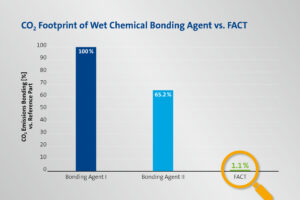
By eliminating these substances, the FACT process reduces carbon dioxide emissions to about 1.1% of those generated by traditional wet-chemical methods, based on internal lifecycle assessments. Alternative bonding processes using different binders were found to produce about 65.2% of the emissions of conventional methods.
“This approach not only reduces emissions but also simplifies the manufacturing process and lowers the potential for errors,” said Dominik Langore, a surface technology manager at the company.
The process also enhances supply chain flexibility by reducing dependence on single-source materials, the company said.
Freudenberg said the technology supports bonding across a wide range of materials, including ferrous and non-ferrous metals and various plastics, regardless of thickness or surface characteristics. The resulting components maintain adhesion and flexibility under high loads and at temperatures as low as minus 40 degrees Celsius.
The bonded materials are resistant to oils, water, hydrogen and diesel exhaust fluid, commonly known as AdBlue, enabling applications across automotive, marine, aviation and energy storage systems. The company said the process could also be used in emerging applications such as battery systems for electric bicycles.
Freudenberg Sealing Technologies, part of the broader Freudenberg Group, develops sealing solutions and materials for automotive and industrial markets.