
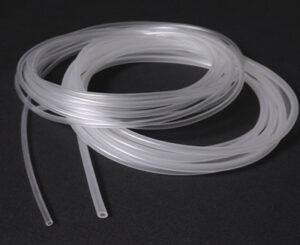
Mitsubishi Chemical’s Zelas TPS used for Sanplatec cell culture tubes
Tokyo, Japan — Mitsubishi Chemical Corp. said it has introduced its thermoplastic elastomer designed for medical use into cell culture tubes used in a regenerative medicine system developed by Sanplatec Corp., marking a new application for the company’s medical-grade resin technology.
The material, Zelas TPS, is being used in the cell culture tubes of Sanplatec’s iP-TEC series, a system for cell culture and transportation used in regenerative medicine. The products were showcased at the 25th Congress of the Japanese Society for Regenerative Medicine held in Kobe on March 19–20, 2026.
Mitsubishi Chemical said Zelas TPS is a styrenic thermoplastic elastomer with rubber-like flexibility that has already been used in medical device tubing and pharmaceutical packaging. The company said the material demonstrated strong performance in cell culture applications, including improved proliferation of induced pluripotent stem (iPS) cells compared with polyvinyl chloride (PVC).
The company also highlighted the material’s compatibility with common sterilization methods, including autoclave and gamma irradiation at 25 kGy, as well as its heat-sealing properties. Mitsubishi Chemical said these features make it suitable for closed-loop cell culture systems, which allow media exchange through connected tubing without opening a sealed container.
Sanplatec develops containers and devices for cell culture and live-cell transport and provides integrated systems from culture through delivery. The company will use Zelas TPS in thermoplastic elastomer tubing under its iP-TEC brand.
Mitsubishi Chemical, operating under its KAITEKI Vision 35 strategy, has identified medical and life science technologies as a key business focus area. The company said it plans to continue expanding development of thermoplastic elastomers for use in regenerative medicine and other healthcare applications.