
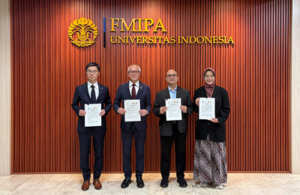
Bridgestone launches joint research project for the genetic analysis of para rubber trees
Tokyo, Japan – Bridgestone Corporation (Bridgestone) announced that it has launched joint research with Universitas Indonesia, Public University Corporation Yokohama City University (Yokohama City University), and Public University Corporation Maebashi Institute of Technology (Maebashi Institute of Technology) for the genetic analysis of para rubber trees. This collaboration will leverage trees and genetic information from Bridgestone’s natural rubber farm in Indonesia. Working together with the advanced technologies of the partner universities, the joint project aims to create a marker-assisted selection technology that enables early identification of elite trees (high-yielding, stable performers). Through this effort, Bridgestone and the partner universities seek to contribute to future improvements in the productivity and stable supply of natural rubber.
Bridgestone places sustainability at the core of its management and aim to implement its unique Sustainability Business Model that links its business to the realization of carbon neutrality, a circular economy, and nature positivity across the entire value chain, from “produce and sell” and “use” of products to their “renewal” to raw materials. As part of these efforts, this joint research aims to enhance the sustainability of natural rubber and help advance a more circular and regenerative business model.
A stable supply of natural rubber is critical to supporting safe, secure and comfortable mobility through tires. While natural rubber is a renewable resource, its source–the para rubber tree–grows only in geographically limited regions near the equator and is susceptible to external factors such as climate change and disease. As global vehicle ownership continues to rise and demand for natural rubber used in tires is expected to increase, there is a key challenge to build systems that can sustainably and stably supply natural rubber without expanding farmland in ways that could lead to deforestation. To address these challenges, Bridgestone has been advancing technology development from multiple angles to improve natural rubber productivity. An example of these efforts includes developing disease diagnostics and optimizing planting plans on limited farmland using big data. In addition, the company supports the smallholders who underpin natural rubber production by deploying these technologies and providing training based on know-how developed on its own farms. This helps contribute to higher productivity and more stable livelihoods, and ultimately, to the sustainability of natural rubber.
In this joint research, Bridgestone will provide latex samples collected from individual para rubber trees on its farm and genetic information on para rubber trees held by the company*5. Universitas Indonesia will be responsible for obtaining genetic information (DNA and RNA), while Yokohama City University and Maebashi Institute of Technology will conduct genetic analyses to identify genes associated with natural rubber productivity. Building on the insights obtained, Bridgestone and the partner universities will work together to establish a marker-assisted selection technology that enables the high-precision, rapid selection of elite trees. This approach is expected to significantly shorten parts of the verification period that have traditionally taken decades in conventional breeding. Following validation of the technology and the establishment of propagation and nursery systems, Bridgestone aims–over the medium to long term–to replace existing trees with elite trees. This will help to improve productivity and stabilize yields within finite land resources.