Articles

ArticlesChemicals & MaterialsFeatured

Processing promoters: Additives for rubber compounds improve mixing and processing

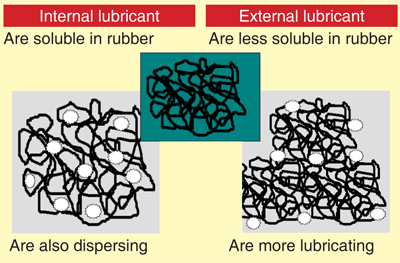
The efficient mixing of rubber compounds comes with many challenges. These include effectively blending the individual raw materials, which involves breaking down and blending different types of elastomers, adequately dispersing large fractions of fillers, oils and small weighments of chemicals in a relatively short time in the internal mixer. Once mixed, the compound then must be processed, e.g., extruded, calendered or molded to form the desired shape which is then vulcanized to produce the final product. The choice of the correct processing promotor will assist in these efforts. Certain promotors function primarily as dispersing agents, whereas others act more as lubricants to speed the mixed compound through the production process. Both types improve overall compound quality and production efficiency. Compound viscosity typically is also reduced. This article will focus on a number of processing promotors offered by Rhein Chemie and their effects on rubber compound quality and processability.

Read More
ArticlesChemicals & MaterialsFeatured

FKM and FFKM crosslinking methods and their effect on upper use temperature of seals

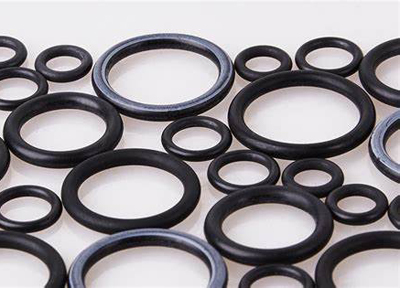
Fluoroelastomers (FKMs) were first introduced to market more than 50 years ago in response to performance needs in the aerospace industry. Their increased thermal stability and chemical resistance, and comparable mechanical properties relative to hydrocarbon rubber materials provided significant performance benefits. Not surprisingly, FKM compounds soon became widely adopted in seals and gaskets for many other applications across the automotive, oil and gas, semiconductor and pharmaceutical/ food processing industries, where long term durability and reliability in challenging environments was critical.

Read More
ArticlesChemicals & MaterialsFeatured

Dynamic mechanical properties and crosslink density testing of silicone elastomers

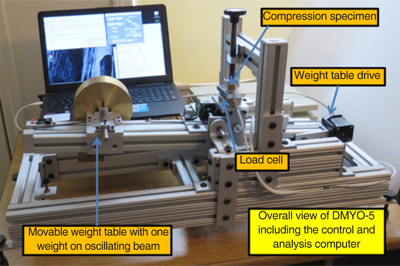
Material evaluation tests for this article were performed using the recently developed Dynamic Mechanical Yerzley Oscillograph (DMYO). Just like the Yerzley Oscillograph (YO), the DMYO supports the ASTM D945 standard. Its design is an evolution of the YO with additional sensors,
electronic data acquisition and computer control, including automated data evaluation.

Read More
Newsrss1Testing & Instruments

Endurica tames road loads with new software release

Endurica LLC announces a new feature in its Endurica CL fatigue solver: automatic block cycle generation. The feature enables users to extract a simplified durability testing schedule (known as a block cycle test) from multi-channel road loads recorded at the testing track. The simplified testing schedule preserves the most essential features of the original road load history, while maintaining the original failure mode and discarding non-critical load history.  The capability enables rubber part suppliers to design fatigue tests that execute quickly and that develop realistic damage. It enables car makers to ensure durability under actual driving conditions.

Read More
Automotive Elastomers & PartNewsrss4

Yokohama Rubber significantly reduces weight of automotive air-conditioning hose by using a rubber–resin polymer

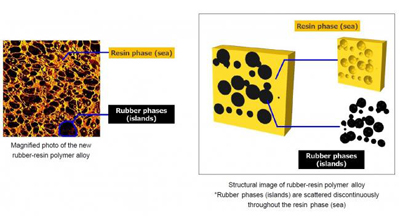
The new ultralight hose is made from a rubber–resin polymer alloy developed by applying Yokohama Rubber’s proprietary technologies. This new alloy combines the flexibility and heat resistance of rubber with the high gas barrier properties of resin, and its use enabled Yokohama Rubber to reduce the hoses’ weight by 50 percent. In addition, hoses made using this alloy do not need to be put through a vulcanization process that uses a large amount of heat. The new hoses will therefore contribute to the effort to achieve carbon neutrality. One of Yokohama Rubber’s strengths is its design and evaluation capabilities that enable it to integrate hoses and pipes in ways that respond to various customer requirements and piping layouts. The company plans to develop and promote all-resin piping to achieve a significant reduction in the weight of hose and pipe combinations. While continuing to develop a commercial version of this new lightweight hose, Yokohama Rubber also aims to enter the market for other types of automotive pipes.

Read More
Carbon Black, Silica & Reinforcing MaterialsNewsrss1

Orion Engineered Carbons partners with RISE Research Institutes of Sweden to produce renewable carbon black

Orion Engineered Carbons S.A. has partnered with RISE Research Institutes of Sweden  in a project to develop and produce renewable carbon black. This collaboration represents an important step towards more climate-neutral carbon black production by replacing traditional carbon black feedstock with pyrolysis oil from biomass oil. Orion plans to convert the biomass oil into carbon black using its small-scale furnace reactor in Kalscheuren, Germany and will explore ways to upscale the process to match market demands. Additionally, using a pilot-scale reactor at its site in Piteå, Sweden, RISE will evaluate the use of electrofuels, such as plasma or hydrogen from electrolysis, as sustainable heat sources for the carbon black process.

Read More
Machinery & EquipmentNewsrss3

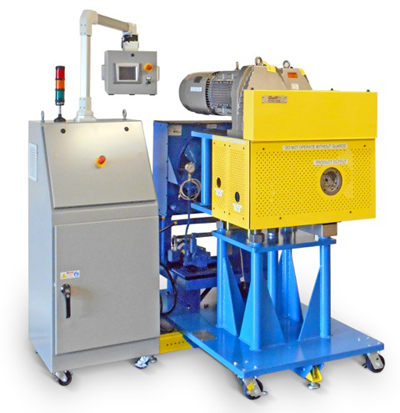
Guill Tool designs new rotary extrusion dies with increased speed

Guill Tool announces a new design for its high-production rotary models, both inline and crosshead style.  A 2X increase in speed, with models running to 1000 RPM depending on the application, are now available in the Guill line of patented rotating tip & die designs.  By rotating the tooling in relation to the material flow, a rotary head increases the wall strength of an extrusion, thereby allowing a thinner wall with less material and the corresponding cost savings for the user.   Typical applications for rotary heads include medical and multi-lumen tubing plus various high-end extrusions with interlocking layer or multiple striping requirements.  

Read More
ArticlesExtrusionFeaturedMachinery & EquipmentUncategorized

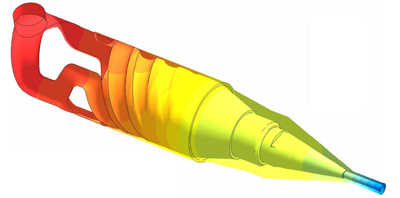
Medical rubber tubing process and die optimization: Die redesign and fine tuning

Part 1 of this contribution, published in the May 2021 edition of Rubber World, investigated a real manufacturer’s process that was set to produce medical tubing. It was found (through trials at the extruder, then through simulations) that the equipment available to the manufacturer was too large for the relatively low output that was required for this project, and consequently the polymer was degrading on the screw surface. It was ultimately determined through simulation that a smaller extruder, with a screw optimized for the low rate, would work better.

Read More