Silicone & Medical

Newsrss3Silicone & Medical

Shin-Etsu Chemical develops innovative new silicone materials for wearable devices

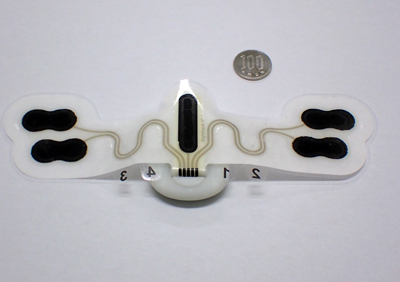
Shin-Etsu Chemical Co., Ltd. has developed innovative electrophysiological dry electrodes and high-elasticity wiring materials, which will be used to contribute to the achievement of superior performance characteristics for next-generation wearable devices. These wearable devices enable remote measurement and transmission of a person’s electrical bio signals, including such vital signs as heart rate and electrocardiogram (ECG) waveform, while a person is wearing the device on their body. They serve to help people improve their health and fitness conditions and will help bring about earlier diagnosis and management of chronic diseases

Read More
ArticlesSilicone & Medical

EMI silicone now part of U.S. Department of Defense qualified products list

Specialty Silicone Products (SSP) announced that SSP-2569-65, an EMI silicone filled with silver-copper particles, is now part of the Qualified Product List (QPL) for MIL-DTL-83528, Type A. In a July 22 letter, the Defense Logistics Agency (DLA) informed SSP that SSP-2569-65, a 65 durometer conductive elastomer for shielding and sealing, passed qualification testing and has been added to QPL MIL-DTL-83528 for specific drawings and material types.

Read More
ArticlesFeaturedSilicone & Medical

Silicone and epoxy hybrid resins exhibit wide range of mechanical properties

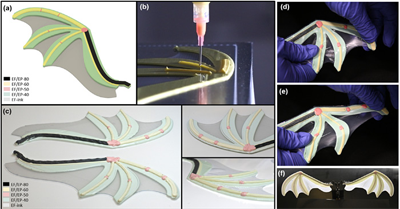
The largest range of silicone and epoxy hybrid resins for the 3D printing of wearable devices, biomedical equipment and soft robotics has been developed by researchers from the Singapore University of Technology and Design (SUTD). In a study published in Applied Materials Today, the range of tunable functionally graded materials, which displayed over five orders of magnitude of elastic modulus, demonstrated excellent interfacial toughness, higher precision in complex structures and better fabrication control for the integration of mechatronic components.

Read More
Newsrss1Silicone & Medical

Dow introduces three new silicone technologies for automotive electronics

Dow introduced three new silicone technologies for electric and hybrid-electric vehicle electronics applications. These innovative new products – DOWSIL™ TC-2035 CV Adhesive, DOWSIL™ TC-4551 CV Gap Filler and DOWSIL™ TC-4060 GB250 Thermal Gel – increase the already high value and versatility of Dow’s silicones portfolio to meet the evolving needs of automotive electrification. Advanced features of these DOWSIL™ products include reliable performance, high thermal conductivity, controlled volatility for very efficient heat dissipation, and easy processing for enhanced productivity.

Read More
Market ReportsNewsrss6Silicone & Medical

Global silicone resins market size is expected to reach $6.3 billion by 2026

The global Silicone Resins Market size is expected to grow from USD 4.8 billion in 2021 to USD 6.3 billion by 2026, at a CAGR of 5.5% during the forecast period. The driving factors for the silicone resins market is increased involvement of silicone resins in the industrial segment, and the building & construction, automotive & transportation, and electronic industries in emerging economies. This driving factor is boosting the demand for silicone resins industries.

Read More
ArticlesFeaturedSilicone & Medical

Part design simulations for silicone rubber components

The successful design of medical device components is increasingly dependent on simulations based on finite element analysis (FEA). Simulations provide a rapid and cost-effective way to determine optimal construction of multi-component systems, as well as information on how components interact with each other during use. Investing in accurate, early design simulations can provide significant resource savings by decreasing the amount of iterative loops necessary in the prototype process to validate the overall device design for FDA or other governing body approvals.

Read More
ArticlesFeaturedSilicone & Medical

An overview of the silicone recycling process

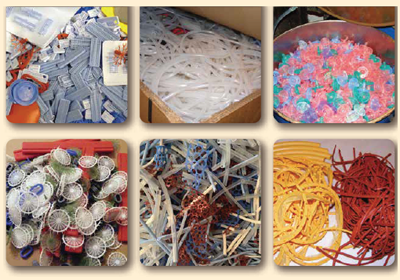
With global annual production of silicone expected to grow to 2.9 million tons by 2025, it is increasingly important to have an environmentally-friendly end-of-life option for silicone products. The current solution for discarding silicone scrap is to either landfill or incinerate it. Both of these are detrimental choices for the environment.

Read More
ArticlesFeaturedSilicone & Medical

Effects of aerosil on the properties of silicone rubber

Silicones or polysiloxanes belong to a class of elastomers and are often referred to as silicone rubber. The prevailing type of polysiloxanes is polydimethylsiloxane (PDMS). Development began in 1940 when Eugene G. Rochow and Richard Müller independently developed the synthesis of methylchlorosilanes directly from elemental silicon. This discovery marked the beginning of a series of important findings on a new class of materials, namely silicone elastomers. The first silicone based product was a coating for the airplane industry, presented in 1942 by Dow. Presently, silicones are used in thousands of applications. Worldwide, the market for silicone consumption shows steady growth year after year

Read More
Market ReportsNewsrss6Silicone & Medical

Construction silicone market in the Americas forecast at $1.2 billion by 2025

America’s construction silicones market size is forecast to reach around $1.2 billion by 2025, after growing at a CAGR of 6 percent during 2020-2025. Silicones are polymers composed of many repeated subunits of siloxane. An increase in the standard of living has increased the construction activities in America, which in turn boosted the use of silicone for adhesives and tapes. Silicone rubbers are also used as a sealant in windows and doors to insulate the building from heat and moisture. Moreover, rising environmental concerns and the presence of substitutes such as urethane based sealants and polysulfide sealants act as a restraining factor for the growth of America’s construction silicones market.

Read More