Time-temperature superposition
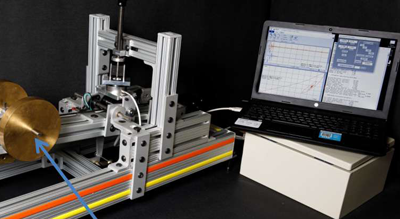
TTS exploits the unique equivalence of time and temperature in soft materials to allow engineers to characterize materials rapidly and accelerate the design cycle.
Read More
TTS exploits the unique equivalence of time and temperature in soft materials to allow engineers to characterize materials rapidly and accelerate the design cycle.
Read MoreThe purpose of performing material testing is to ensure the
properties of the materials will meet specific requirements.
Proper testing on a material testing/force stand ensures that the
material will respond appropriately when placed under the expected
usage conditions, or meet the standards required for
product development. For rubber materials, the properties are
often found by testing the raw component before it is made into
the final product.
HEXPOL Compounding Americas (HCA) announces an enhanced collaboration with LabsCubed. HEXPOL, a pioneer in custom rubber compounding, and LabsCubed, a dynamic and innovative automation company, initiated this partnership last year to redefine the benchmarks for rubber quality control, reaffirming HEXPOL’s dedication to innovation and excellence. Following the successful initial phases, HEXPOL is now extending the deployment of LabsCubed automated testing equipment across the United States and Mexico.
Read MoreSales of the rubber testing equipment market have likely documented a Y-o-Y growth rate worth 4.6% in 2022 as compared to 2021. By 2022-end, the market was poised to reach US$ 13.7 Billion. As of 2021, rubber testing equipment demand was valued at US$ 13.1 Billion. From 2022-2032, a CAGR of 3.3% has been anticipated, with an expected closing value of US$ 19 Billion according to Future Market Insights.
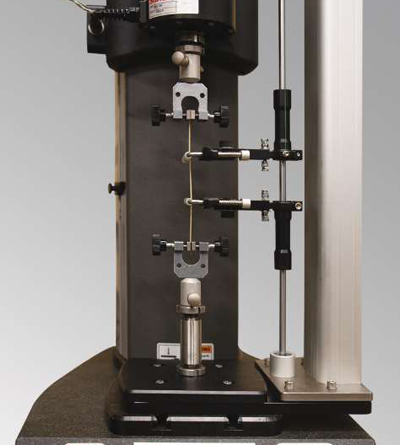
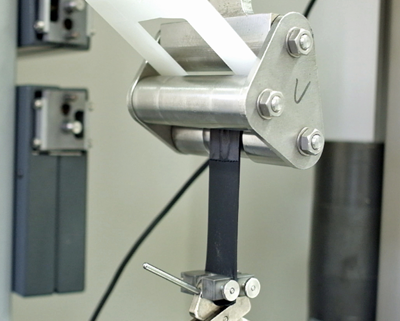
Read MoreTensile testing is arguably the most common test method used in both force measurement and material testing. Tensile testing is used primarily to determine the mechanical behavior of a component, part or material under static, axial loading.
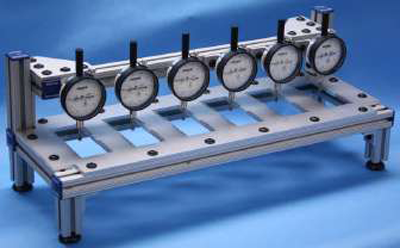
Read MoreThe C11 Wallace compression stress relaxometer allows flexibility and enables different samples over varying time periods to be tested.
Read MoreChanges in compound chemistry are evaluated differently based on the chosen abrasion test and on the immediate test settings used.
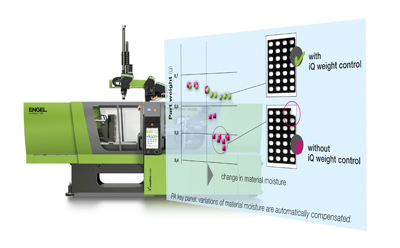
Read MoreMachine learning methods are used to explore the potential of mold breathing for quality assurance in rubber injection molding.
Read MoreA new method to ensure consistency and quality in rubber manufacturing, developed by a research team from the University of Tennessee, Knoxville, and Eastman, is likely to show real-world impact on material sustainability and durability for products such as car tires.
Read MoreProperties of elastomers can be measured and computed by the DMYO-V oscillograph.
Read More