
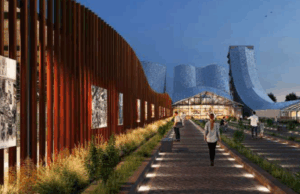
Michelin unveils cutting-edge Innovation Park in Clermont-Ferrand, France
Clermont-Ferrand, France – In a bold stride toward redefining the future of transportation, global tire giant Michelin has officially inaugurated the Michelin Innovation Park at its historic Cataroux site. This state-of-the-art facility, spanning 10 hectares in the heart of Clermont-Ferrand, represents a €200 million investment aimed at accelerating breakthroughs in sustainable mobility, materials science, and digital transformation. The park is poised to become a global hub for collaborative innovation, bringing together Michelin’s top engineers, startups, and academic partners under one roof.
The Michelin Innovation Park is not just a research center—it’s a living ecosystem designed to tackle the pressing challenges of climate change and urban mobility. Located on the grounds of Michelin’s original 19th-century factory, the park cleverly blends industrial heritage with futuristic design. Its centerpiece is a sprawling, energy-efficient complex featuring open-plan labs, high-tech prototyping workshops, and immersive simulation environments powered by AI and virtual reality. Solar panels cover much of the roof, and the site incorporates green spaces that double as biodiversity corridors, aligning with Michelin’s “All Sustainable” vision.
“At the Michelin Innovation Park, we’re not merely inventing products; we’re co-creating the sustainable world of tomorrow,” said Florent Menegaux, CEO of Michelin Group, during the ribbon-cutting ceremony attended by local dignitaries and innovation leaders. “This facility embodies our commitment to open innovation, where diverse minds converge to turn bold ideas into real-world impact. From next-generation bio-based materials to connected tire technologies that enhance road safety, the possibilities here are limitless.”
What sets the Innovation Park apart is its emphasis on partnerships. Michelin has already secured collaborations with over a dozen startups through its in-house accelerator program, as well as alliances with institutions like the French National Center for Scientific Research (CNRS) and Europe’s leading universities in engineering and environmental sciences. The park’s “plug-and-play” infrastructure allows external innovators to integrate seamlessly, with dedicated co-working spaces, shared testing facilities, and even a venture fund to support promising ventures.
Key focus areas include:
- Sustainable Materials: Developing recyclable, low-carbon compounds that reduce the environmental footprint of tires and mobility components.
- Smart Mobility Solutions: Integrating IoT and AI for predictive maintenance and energy-efficient vehicle systems.
- Urban and Air Mobility: Exploring innovations for electric vertical takeoff and landing (eVTOL) vehicles and micromobility devices.
Early projects at the park are already yielding results. One standout initiative involves a partnership with a French biotech firm to engineer tires from agricultural waste, potentially cutting production emissions by 30%. Another is a digital twin platform that simulates tire performance in real-time, speeding up development cycles by up to 50%.
Bridging Past and Future
The choice of the Cataroux site is symbolic. Once the cradle of Michelin’s pneumatic tire invention in 1891, it now serves as a testament to the company’s evolution from a manufacturing powerhouse to a mobility solutions leader. The park’s design incorporates restored elements of the original factory, such as exposed brick walls and heritage machinery displays, creating an inspiring backdrop for modern inventors.
This launch comes at a pivotal moment for Michelin, which reported a 5% rise in R&D spending last quarter amid growing demand for eco-friendly technologies. With global regulations tightening on carbon emissions and the electric vehicle market surging, the Innovation Park positions the company to capture a larger share of the €300 billion sustainable mobility sector by 2030.
Industry analysts praise the move as a masterstroke. “Michelin’s Innovation Park isn’t just about keeping pace with rivals like Bridgestone or Continental—it’s about setting the agenda,” noted Dr. Elena Vasquez, a mobility expert at the European Transport Forum. “By fostering open ecosystems, they’re democratizing innovation in a way that could redefine industry standards.”
As the sun set over the Auvergne volcanoes on inauguration day, guests toured the facility’s interactive exhibits, witnessing prototypes of self-healing tires and hydrogen-compatible wheel systems. For Michelin, the park is more than infrastructure—it’s a promise to drive progress, one revolution at a time.
The Michelin Innovation Park is now operational, with public tours and partnership inquiries open via Michelin’s website. As the world accelerates toward net-zero goals, Clermont-Ferrand is once again at the wheel.