




Today's News

Dow expands propylene glycol capacity in Thailand
Dow announced the start-up of its propylene glycol (PG) capacity expansion at its integrated manufacturing facility in Map Ta Phut, Rayong, Thailand. The low capital intensity, higher-return, incremental investment increases propylene glycol capacity by 80,000 tons per year, which brings the total output to 250,000 tons per year, making the Dow Map Ta Phut PG manufacturing facility the largest of its kind in Asia Pacific.

Lubrizol launches new grade of bio-based TPU adhesive
Lubrizol Engineered Polymers announces the expansion of its bio-based thermoplastic polyurethane (TPU) portfolio for adhesives with the addition of Pearlbond™ ECO 590 HMS TPU for hot melt adhesives (HMAs).
This high-performing resin from a renewable source can be applied by adhesive formulators or designers in furniture, edge banding, electronics, hot melt film, textile lamination, seam tape, footwear, and transportation.

Continental unveils new hydraulic hose crimper technology
Continental has announced the new PC160i Crimper technology that takes the guesswork out of hose crimping, ensuring a reliable connection with every new hose application. Driven by CrimpIQ® Pro Mode, the PC160i is designed with the daily operator in mind. Featuring automatic, semi-automatic, and manual modes, with tooling capable of handling true 1 ¼” specifications and extending to some 2” applications, this machine caters to diverse operational needs.

Yokohama Rubber joins RubberWay Geo-Mapping for sustainable natural rubber procurement
A founding member of the Global Platform for Sustainable Natural Rubber (GPSNR), Yokohama Rubber revised its “Procurement Policy for Sustainable Natural Rubber” in September 2021 and is strengthening its collaboration with GPSNR activities. The introduction of RubberWay® Geo-Mapping reflects the principle of “improve traceability” and “environmental initiatives” set forth in the Procurement Policy. Yokohama Rubber will continue to implement and announce initiatives in line with the action guidelines stipulated in this policy. Yokohama Rubber also is endeavoring to achieve the Sustainable Development Goals (SDGs) adopted by the United Nations. As part of these efforts, the Yokohama Rubber Group is promoting the procurement of sustainable raw materials, including natural rubber.

Smithers and Stackpole Engineering Services announce the creation of Virtual Tire Lab
Smithers announces the launch of Virtual Tire Lab, a unique, comprehensive toolset for analyzing raw data and comparing, contrasting, and adjusting virtual tire models for use in design analysis, simulation, and model certification. Virtual Tire Lab utilizes an annual subscription model to provide clients with access to a library of passenger and light truck tire models. During the subscription period, models are added to the Virtual Tire Lab library and include a variety of popular brands, sizes, and categories; such as all-weather, all-season, and EV-specific tires. All models are MF6.2 UM14 Handling Models.
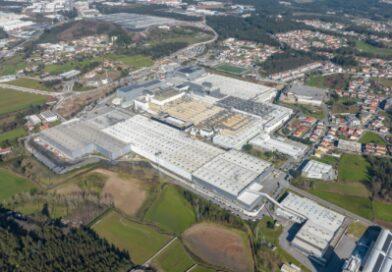
Continental’s Portugal plant now produces CO2-neutral tires
Continental now produces CO2-neutrally tires at its tire plant in Lousado, Portugal. The tire manufacturer has thus taken an important step towards its goal of completely CO2-neutral production. This is possible thanks to the generation of steam using a boiler, that operates entirely on electricity. Continental uses both self-generated solar power and renewable electricity from the power grid for its steam generation. Before, natural gas was used as sole energy source for steam generation at the Lousado tire plant. In the tire industry, a large proportion of the energy consumed is used to generate steam, which is needed to heat the tires, a process known as vulcanization.