May 2021
The May 2021 issue of Rubber World Magazine
Read More
Patents listed in the May issue of Rubber World Magazine
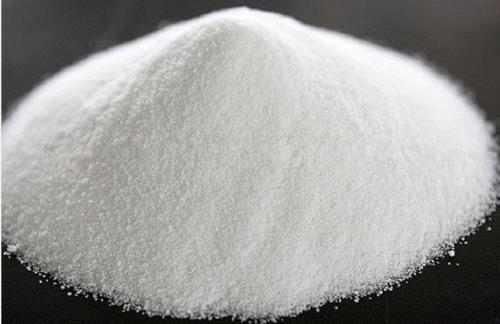
Read MoreChlorinated polyethylene (CPE) polymers were developed by DuPont in the late 1950s by a simple chlorination of polyethylene (PE) in a solution process using a solvent. In 1971, Dow Chemical Company introduced Tyrin CPE using a more efficient and cost-effective aqueous suspension chlorination known as the slurry process. The polyethylene feedstock is in a powder form and the final CPE product remains in powder form. The chlorination process can be modified to produce amorphous (non-crystalline) products or products that contain residual crystallinity
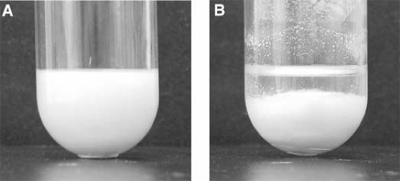
Read MoreRecent developments in stimuli-responsive or “smart” materials offer the opportunity for major advances in material design that could impact markets for latexes. One of the lesser known, but simpler technologies includes polymers and latexes whose properties can be dramatically, and reversibly, switched simply by adding or removing CO2. The processes used offer advantages in sustainability without requiring expensive materials or catalysts, and are based on currently used materials and production methods. This article will give a general overview of three examples relevant to latexes and coatings
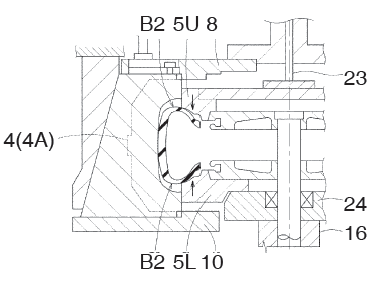
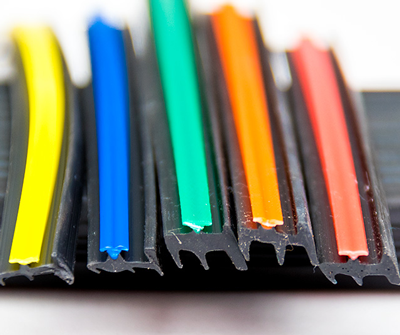
Read MoreAn extrusion die is a purpose built tool designed by cutting shapes in plates to reflect an intended extruded rubber product. In advance of an extrusion project, a process engineer designs the die according to specifications of the project and those of the customer, and installs it on an extruder. Often, an extrusion die is made from hard metal, like steel, polished and with sharp edges. Once all plates of the mold or die are created, rubber is forced through them under high pressure in a high temperature zone
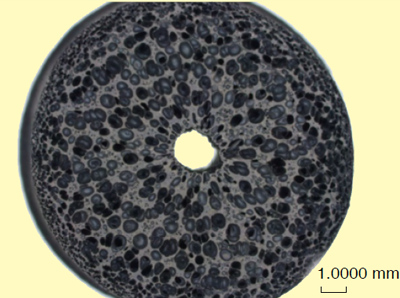
Read MoreIt has long been established that unvulcanized solid elastomer compounds can be expanded to sponge forms by the incorporation into the formulation of thermally activated gas releasing chemicals known as blowing agents. During controlled heating of the compound, there is molecular dissociation of these blowing agents, and this is often designed to occur in conjunction with the onset of vulcanization of the compound, enabling the production of a range of sponge structures.
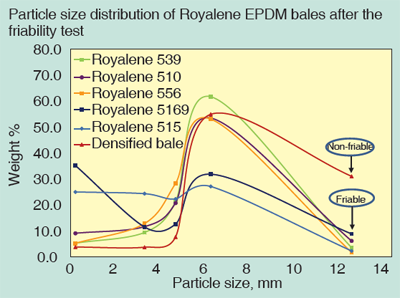
Read MoreRoyalene EPDM, a terpolymer of ethylene, propylene and a
non-conjugated diene, is one of the most versatile specialty
elastomers in commercial use today. The main attributes of
EPDM are its outstanding resistance to oxidation, ozone and
the effects of weathering. It is also highly extendable, allowing
high levels of fillers and plasticizers to be added, while still
maintaining good physical properties
Understanding and predicting how extruded profile dimensions change along an extrusion line contribute significantly to the design of shaping dies and the effectiveness of dimensional control. Upon exiting the extrusion die, the dimensions of nonsymmetric profiles change non-uniformly along the line due to swell and drawdown.
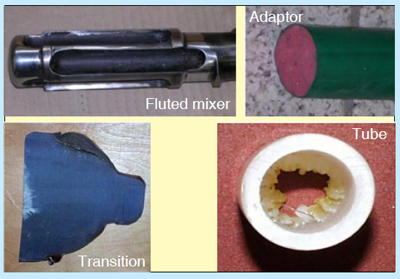
Read MoreReactive extrusion is an attractive route for polymer processing to carry out various reactions, including polymerization, grafting, branching and functionalization. The extruder is like an ideal reactor for polymer chemical modification. Reactive extrusion is an economically attractive process, since the extrusion and processing are done in a single stage.
Read MoreKeltan 13561C was introduced as the premier EPDM grade for extruded seals. It has quickly become apparent that the unique combination of the grade’s characteristics makes this material one of the principal tools for other applications. The very high molecular weight and long chain controlled branching drive economical compounding and enhanced processing. Hose formulations can benefit from these characteristics.
Read More