Orion Engineered Carbons commissions new carbon black plant in Italy
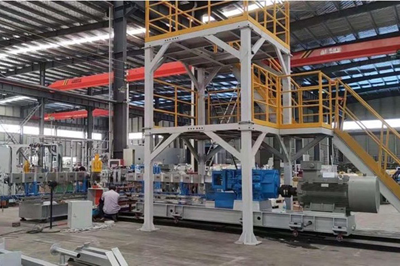
The new 25-kiloton line at the facility in the northern city of Ravenna produces both specialty and technical rubber carbon blacks, primarily for the European market.
Read More
The new 25-kiloton line at the facility in the northern city of Ravenna produces both specialty and technical rubber carbon blacks, primarily for the European market.
Read MoreThe most recent Ceresana report concerning the world market for carbon black shows that this important industrial base material is still mainly produced by incomplete combustion of fossil raw materials, most often from heavy petroleum fractions. The current market report predicts that the demand for carbon black will rise to 17 million tons per year by 2030
Read MoreMonolith manufactures an environmentally friendly carbon black that results in two tons less CO2 emitted for every ton of carbon black produced. This carbon black has the same physical and colloidal properties as the incumbent furnace black, a process that was developed approximately 80 years ago. Monolith carbon black is manufactured using natural gas and renewable electricity, as opposed to pyrolysis fuel oil (PFO), so the product is a cleaner, more pure form of carbon black which is either a drop-in replacement for furnace black or very close in performance in rubber compounds. This article will explain the environmental advantage and present the physical properties as well as the performance data in rubber for Monolith’s new to the market plasma carbon black.
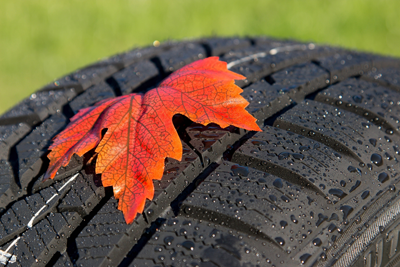
Read MoreA wide variety of rubber compositions is used in the tire industry. The base elastomers that are commonly used consist of blends of natural rubber (NR), butadiene rubber (BR) and styrene-butadiene rubber (SBR). It is apparent that the utilization of rubber without filler does not provide good properties for any application.
Therefore, filler is used to impart better properties to rubber products, with carbon black or silica used commercially. Other ingredients with different functionalities are also incorporated into rubber compounds, depending on the application; i.e., softeners, vulcanizing agents, accelerators, activators, retarders and antidegradants.
Polycyclic aromatic hydrocarbons (PAHs) are present as impurities in the raw materials used for rubber
and plastic compounding, particularly in carbon black and extender oils. PAHs have the potential to cause
adverse health effects, and while there is confirmation that these chemicals are not bioavailable once
compounded into goods, the in-place legislation regulates the PAHs in raw and/or final materials (refs. 1-
3). Given these regulatory requirements, it is advantageous to make low PAH products available to the industry; in particular, for consumer rubber goods.
Cutting edge technology is typically the focus of Rubber World’s technical articles. This somewhat more mundane feature will focus on the questions: What does one do when something breaks? What does one do when a product does not work as intended; and, more often than not, when someone needs an explanation yesterday? This article will discuss some general approaches and methodology applicable to failure analysis of rubber articles.
Read MoreRubbintec Inc. has developed and patented an innovative and scalable rubber “devulcanization” manufacturing process that cleanly and efficiently recovers high quality rubber from waste tires on an industrial scale. The recovered rubber can easily be revulcanized to make new rubber products, such as rubber mats, conveyor belts, footwear soles, rubber flooring, liners, membranes, field covers, railway sleeper pads, railway sleepers and tire treads, to name a few. A certain percentage of the devulcanized material can also be added to a tire manufacturer’s rubber mix, which would assist tire manufacturers to be part of the circular economy and to make their production more sustainable. The selling price is said to be less than virgin rubber. Together with its collaborator, Polylema, production of asphalt modifiers that can substitute for SBS, at a lower cost, will also take place.
Read MorePatents as compiled by the editors or Rubber World for February 2022.
Read MoreShin-Etsu Chemical Co., Ltd. will implement over ¥80 billion in facility investments for its silicones business, one of its main businesses, with the aim of further expanding and strengthening this business
Read Moree silicone oil market and it is poised to grow by $ 502.54 mn during 2022-2026, progressing at a CAGR of 4.20% during the forecast period accordign to ReportLinker. The report on the silicone oil market provides a holistic analysis, market size and forecast, trends, growth drivers, and challenges, as well as vendor analysis covering around 25 vendors.
Read More