
Dunlop expands support for smallholder rubber farmers in Indonesia
Tokyo, Japan – Dunlop is expanding a program to help smallholder natural rubber farmers in Indonesia as the tire company seeks to strengthen its supply chain and promote more sustainable rubber production.
The second phase of Dunlop’s Sustainable Natural Rubber project began in April and will continue through April 2029. The program will continue in the Jambi region of Sumatra and expand to Rantau Prapat in North Sumatra.
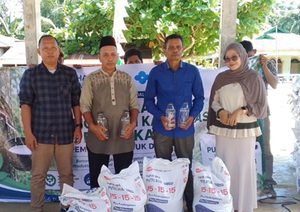
Dunlop said it expects to support 870 farming households annually in each region, or about 1,740 households a year, with the number targeted to increase annually through 2029. Support includes technical guidance and agricultural supplies.
The program builds on an initial phase conducted from 2022 through 2025, when Dunlop supported more than 1,000 smallholder farmers in Jambi. The company said rubber yields in the project areas increased by as much as 19%, while both productivity and profitability improved.
In Jambi, farmers who participated in the first phase will receive follow-up training and continued technical assistance. Dunlop said the goal is to help farmers fully adopt the techniques introduced during the first phase and further increase yields.
The expansion is part of a broader effort by Dunlop to organize its natural rubber sustainability initiatives under a group-wide Sustainable Natural Rubber Subcommittee. The company said natural rubber is a key raw material for its business and that the productivity and income of smallholder farmers, as well as environmental and social issues in producing regions, affect the stability of its supply chain.
Dunlop said its subcommittee is using the Action Framework, known as AR3T, developed by the Science Based Targets Network to categorize efforts involving avoidance, reduction, restoration and regeneration, and transformation. The company said the framework will help connect activities such as risk assessment, farmer support and research and development.
Indonesia is one of the world’s major natural rubber producers, with Sumatra among its important production areas. The company said expanding the program to North Sumatra will allow it to apply lessons from the first phase to another region facing similar supply-chain risks.
Dwi Sutrisno, sustainability manager at PT. Hok Tong Indonesia, Dunlop’s implementation partner, said the project is intended to strengthen farmers’ knowledge and skills while supporting higher productivity and more sustainable farming practices.
Dunlop said biodiversity is one of its material issues and that it intends to continue working with suppliers, producers and other stakeholders to improve the sustainability and resilience of its natural rubber supply chain while addressing environmental and social concerns in producing communities.
The company has also pursued other natural rubber initiatives, including joint research with Thai research institutions and universities, a risk assessment tool for natural rubber procurement and participation in projects aimed at improving the sustainability of the natural rubber industry.