Patents for June
Patent as compiled by the editors of Rubber World for the June issue
Read More
Patent as compiled by the editors of Rubber World for the June issue
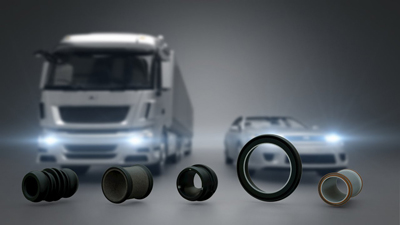
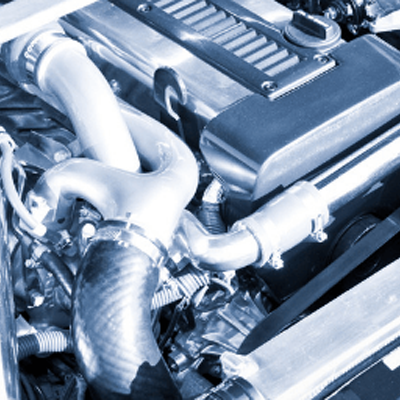
Read MoreIn modern cars, the space for the engine compartment is continuously shrinking for both functional and aesthetic reasons. Increasing vehicle compactness by reducing the space available for design engineers results in hotter engine components which restrict the rubber materials that can be used. This has boosted a fast growing demand in the rubber industry for elastomer parts with durability and increased resistance to temperature extremes. Among elastomers, silicone elastomers and fluoroelastomers show very effective heat resistance resulting from the strong Si-O and C-F bonds present in their chemical structure. However, the main drawbacks are their high price and high processing cost that make compounding, molding and final production very expensive
Read MoreFreudenberg Sealing Technologies’ new generation electrically conductive seals prevent bearing damage caused by electrically induced corrosion, and also increase electromagnetic compatibility. Electric cars with drive systems that operate at 800 volts instead of the usual 400 can recharge in just 15 minutes, and produce enough power to drive several hundred kilometers. The power semiconductors in the inverter ensure that the direct current stored in the battery is converted into the alternating current required by the electric motor while driving. These power electronics are often positioned directly above the electric motor, and are also known as electric engine injection systems.
Read MoreThe successful design of medical device components is increasingly dependent on simulations based on finite element analysis (FEA). Simulations provide a rapid and cost-effective way to determine optimal construction of multi-component systems, as well as information on how components interact with each other during use. Investing in accurate, early design simulations can provide significant resource savings by decreasing the amount of iterative loops necessary in the prototype process to validate the overall device design for FDA or other governing body approvals.
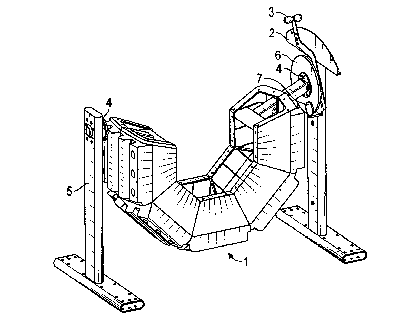
Read MorePatents as compiled for the rubber industry June 2021.
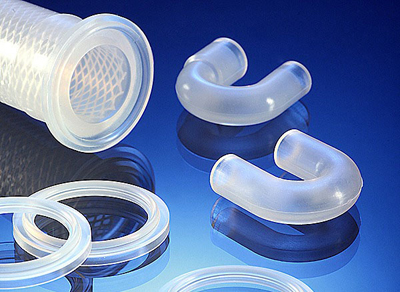
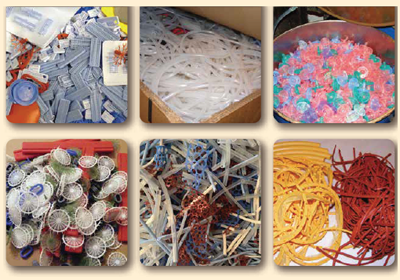
Read MoreWith global annual production of silicone expected to grow to 2.9 million tons by 2025, it is increasingly important to have an environmentally-friendly end-of-life option for silicone products. The current solution for discarding silicone scrap is to either landfill or incinerate it. Both of these are detrimental choices for the environment.
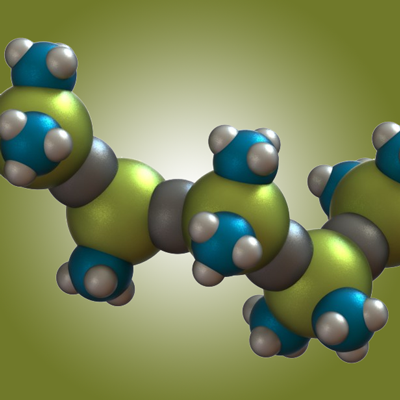
Read MoreSilicones or polysiloxanes belong to a class of elastomers and are often referred to as silicone rubber. The prevailing type of polysiloxanes is polydimethylsiloxane (PDMS). Development began in 1940 when Eugene G. Rochow and Richard Müller independently developed the synthesis of methylchlorosilanes directly from elemental silicon. This discovery marked the beginning of a series of important findings on a new class of materials, namely silicone elastomers. The first silicone based product was a coating for the airplane industry, presented in 1942 by Dow. Presently, silicones are used in thousands of applications. Worldwide, the market for silicone consumption shows steady growth year after year
Read MoreFluoroelastomer lamination technology for multilayer automotive hose constructions is said to be ideal for use in high-pressure, high-temperature areas near the engine, where they are also exposed to NOx, SOx, engine oils or other aggressive automotive fluids. AGC Chemicals Americas՚ AFLAS FEPM fluoroelastomers can withstand continuous service temperatures up to 200°C and have excellent acid, base, amine and steam resistance.
Read MoreExSil silicone nanocomposites are the first in a series of ultrahigh elongation materials that achieve their unique mechanical properties via a radically different mechanism than traditional silicones. Traditional silicones rely on formation of chemically crosslinked chain networks for their elastomeric properties. ExSil nanocomposites, on the other hand, rely on mechanically interlocked polymer chains.
Read More