


Today's News
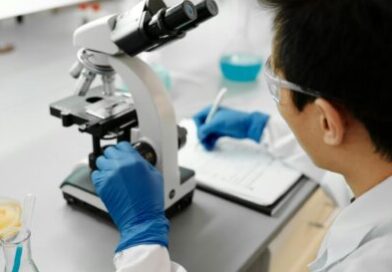
Health impact of tire wear particles remains inconclusive
The final installment of a three-part scientific State of Knowledge (SoK) paper series on tire wear emissions concludes that, while the understanding of tire wear emissions has advanced, current data to quantify human health impacts attributable to tire wear emissions remains inconclusive. Supported by the Tire Industry Project (TIP)—part of the World Business Council for Sustainable Development (WBCSD)—the SoK series represent the most comprehensive review of global science on tire wear emissions to date, analyzing more than 850 peer-reviewed scientific publications.

Bridgestone Golf to close golf ball plant in Georgia
Bridgestone Golf, a subsidiary of Bridgestone Sports Co., Ltd., announced that it will close its Covington, Georgia, golf ball manufacturing and testing facility effective June 30, 2026. The decision is part of the company’s efforts to optimize its global supply chain and strengthen the foundation of its global golf business.

Goodyear to announce first quarter results
The Goodyear Tire & Rubber Company (NASDAQ: GT) will report first quarter 2026 financial results after market close on Wednesday, May 6, followed by a conference call at 8:30 a.m. Eastern time on Thursday, May 7

Yokohama Tire returns as sponsor of the Championship Off-Road Series
Yokohama Tire is back as sponsor of the AMSOIL Championship Off-Road Series for the 6th consecutive year. All Yokohama drivers competed on various GEOLANDAR tires during the eight-race season which kicked-off May 1-3 at the Show-Me Off-Road Shootout at Lucas Oil Speedway in Wheatland, MO.
Mars Mineral expands European installed base
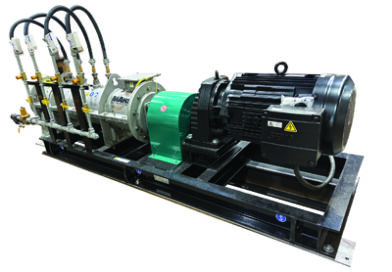
Mars Mineral has shipped its 12th pin mixer for recovered Carbon Black (rCB) processing, Model 12D54Li-SS, to the European Union (EU), supporting the region’s tire recycling industry and rCB producers. rCB is the carbon residue from pyrolyzed end-of-life tires (ELTs). This marks Mars Mineral’s 24th installation worldwide.

Rubber Review issue 35 is now available online
In this issue we have conversation with Muhammad Eizaaz Chief Executive Officer Malaysian Rubber Council (MRC).






Featured





Mixing
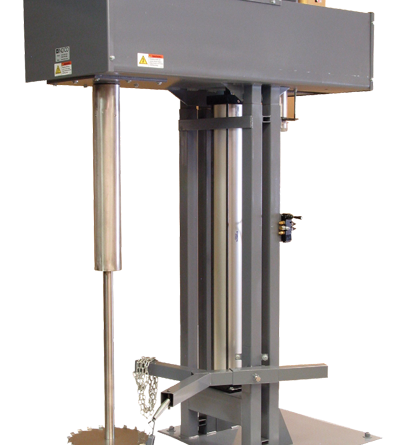
Understanding the difference between high and low shear
Industrial mixing is a crucial process in various industries, including production of rubber formulations, petrochemicals, pharmaceuticals, personal care products and many others. It is also integral to continuous process industries including waste water treatment, fuel and energy production, and mining of metals and minerals.





Chemicals and Materials
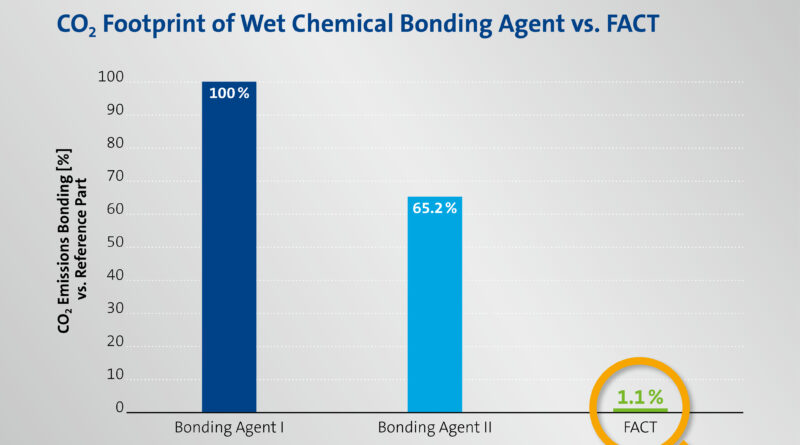
Freudenberg introduces solvent-free bonding process for elastomers to metal
Freudenberg Sealing Technologies has introduced a new adhesive bonding process that eliminates the need for wet-chemical treatments, aiming to reduce environmental impact and improve manufacturing efficiency.






Extrusion

Freudenberg Sealing Technologies unveils new extrusion process using molten salt
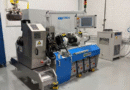
The specific properties of vulcanized materials make them essential for many areas of application. In industries such as aerospace, food and beverages and the energy sector, components must meet the highest standards of abrasion and chemical resistance, elasticity, and durability. Delivering top-quality solutions in these areas requires excellent materials expertise, and at Freudenberg Sealing Technologies this goes hand in hand with state-of-the-art production technologies: With LCM (Liquid Curing Method), the company is now commissioning an advanced vulcanizing extrusion line. This is a process in which the fluid used for vulcanization consists of molten salt, heated to around 200 degrees Celsius and filled with vulcanizing salt. The entire line operates in a closed loop, in which the salt is continuously recycled, fed back into the process and reused.





Silicone & Medical
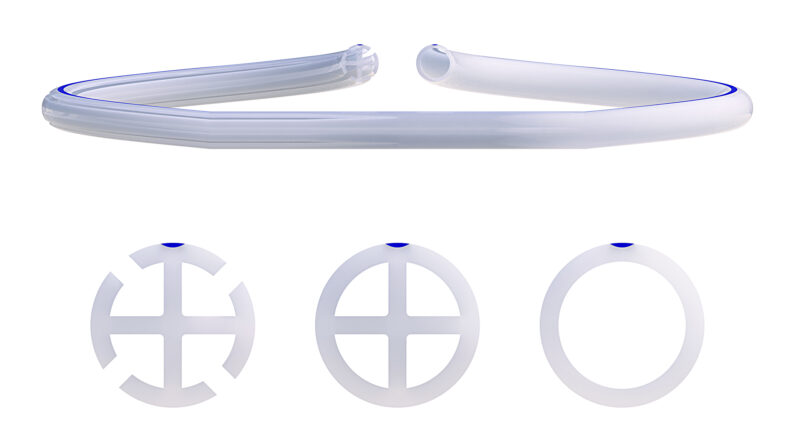
Guill introduces reciprocating head for medical tubing
Guill Tool has released its new reciprocating head. The traditional tip and die assembly is replaced with a linear reciprocating assembly that changes the tube’s profile within a given length. This process is repeated throughout a single extrusion run without interruptions. Cutting capability, in association with the extrusion speed, cuts the finished product to length.


Oil, Gas & Energy

Penn State researchers develop high temperature polymer capacitor
In the race to lighter, safer and more efficient electronics — from electric vehicles to transcontinental energy grids — one component literally holds the power: the polymer capacitor. Seen in such applications as medical defibrillators, polymer capacitors are responsible for quick bursts of energy and stabilizing power rather than holding large amounts of energy, as opposed to the slower, steadier energy of a battery. However, current state-of-the-art polymer capacitors cannot survive beyond 212 degrees Fahrenheit (F), which the air around a typical car engine can hit during summer months and an overworked data center can surpass on any given day.


Testing & Instruments

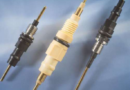
Wire cord measurement sensor for tire calenders
Wire cord measurement sensors provide a highly reliable, high-resolution method for evaluating the geometry of steel reinforced rubber sheets in real time.


Molding

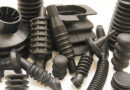
Electrically conductive silicones for enclosure-level EMI shielding
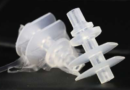
By Dominic Testo, Specialty Silicone Products – Electromagnetic interference (EMI) is a naturally occurring orhuman caused phenomenon that degrades or



Thermoplastic Elastomers & Urethanes

Fraunhofer scientists develop safer method to produce polyurethane without toxic isocyanates
Researchers at the Fraunhofer Institute for Applied Polymer Research (IAP) have developed a new method for producing polyurethane without the use of toxic isocyanates, a key ingredient traditionally required in the manufacture of the widely used polymer.


Latex and Natural Rubber

Sustainable materials for rubber and allied industries
Sustainability is no longer a new concept; it has become a global priority. While quality was the focus of the 1980s, globalization defined the 1990s, and the internet revolutionized the 2000s. The 2010s and after have been dominated by the idea of sustainability. Human survival depends on integrating sustainable practices into every aspect of life. The world is already witnessing alarming environmental changes: rising greenhouse gas emissions, depletion of non-renewable resources and widespread deforestation.